Exploring Fukuoka
This post is a bit different from usual - no exploits this time. My wife and I spent three days exploring Fukuoka and I wanted to share some of it. I’m planning to mix in some other topics every now and then, let me know what you think :)
These are the places we went to (red is day 1, blue day 2, orange day 3 - click a marker for the name):
Day 1: Hakata, Ohori Park and Momochi
Arrival
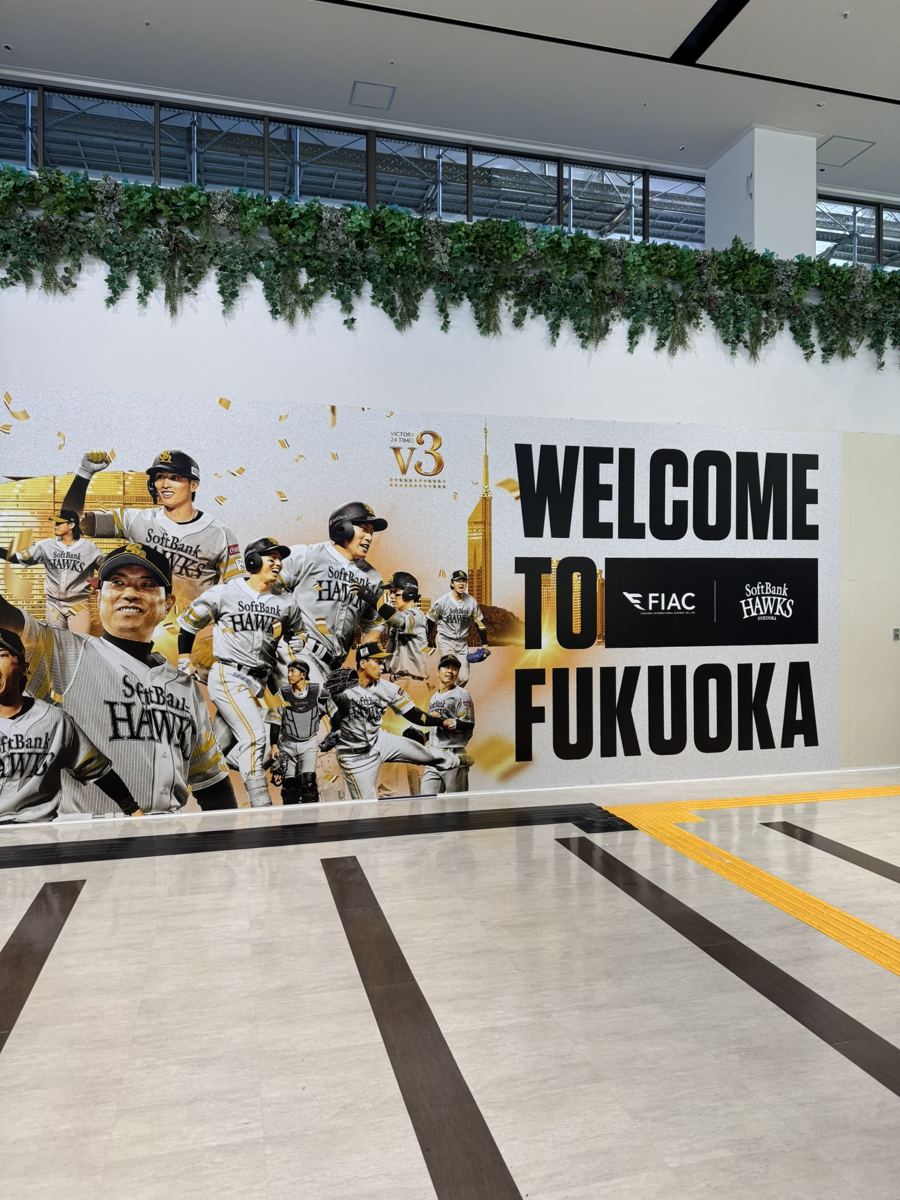
Fukuoka Airport is only two subway stops from Hakata Station, which is really convenient. The SoftBank Hawks greet you right at arrivals - you’ll see them all over the city.
Canal City
First stop was Canal City Hakata, a beautiful mall built around a canal, with regular shows from various artists and water shows. We mostly went for the anime and game shops.
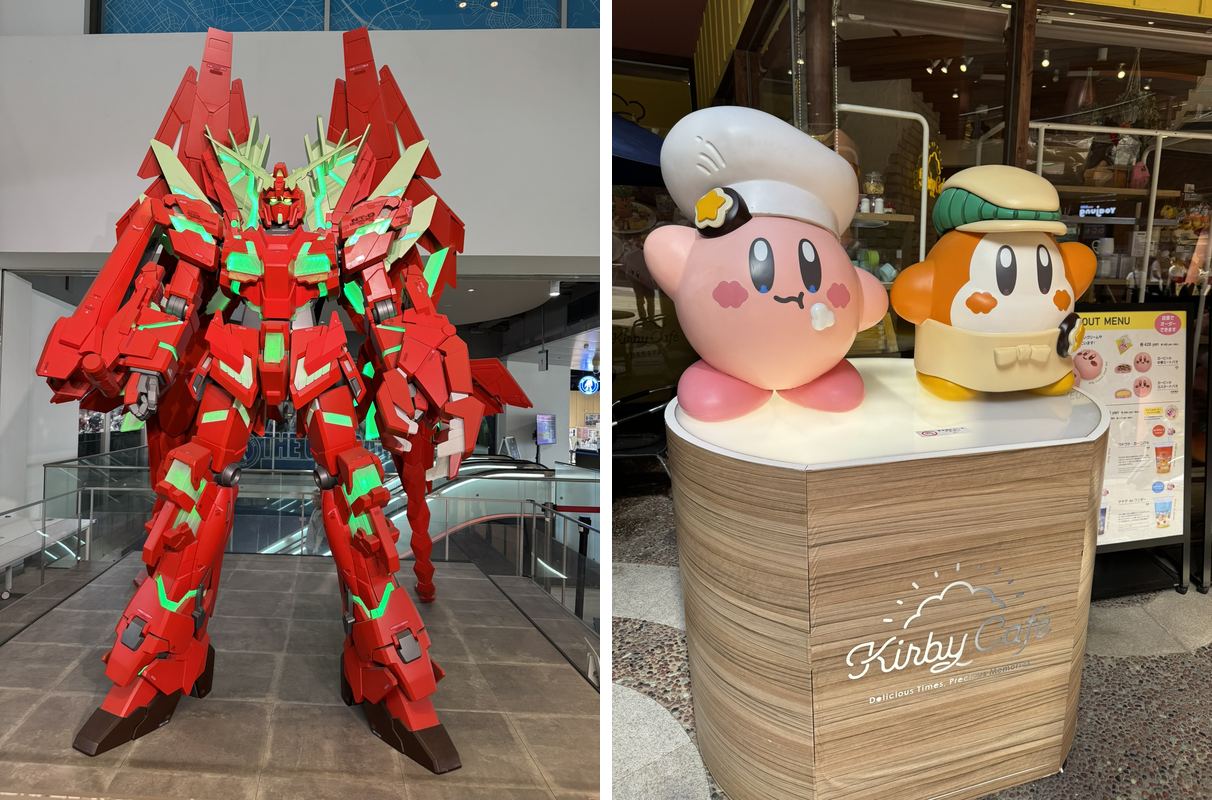 A red Gundam and Kirby & Waddle Dee in front of the Kirby Café.
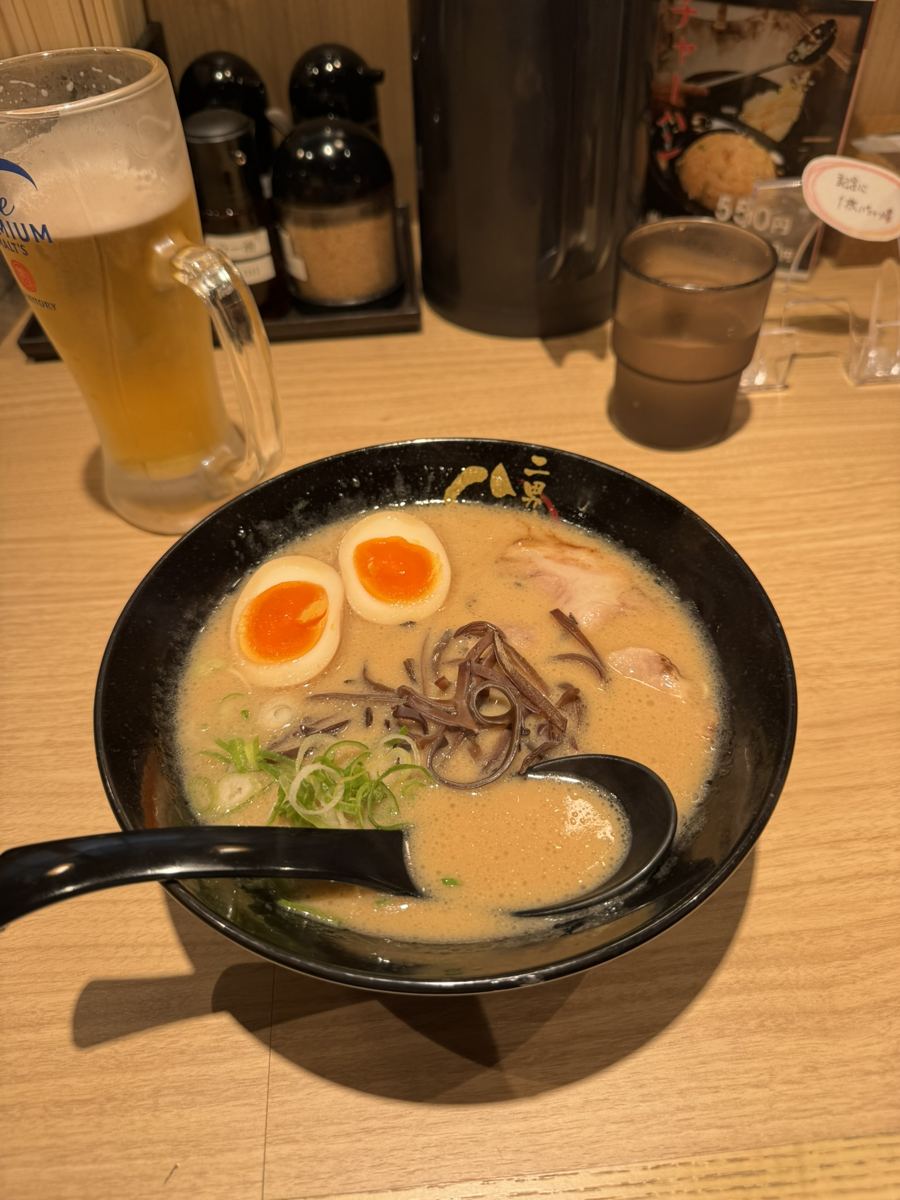
Of course we had tonkotsu ramen and beer in Hakata.
Naka River and Oktoberfest
From there we walked north along the Naka River towards Nakasu (the island between the two river branches where most of the nightlife is).
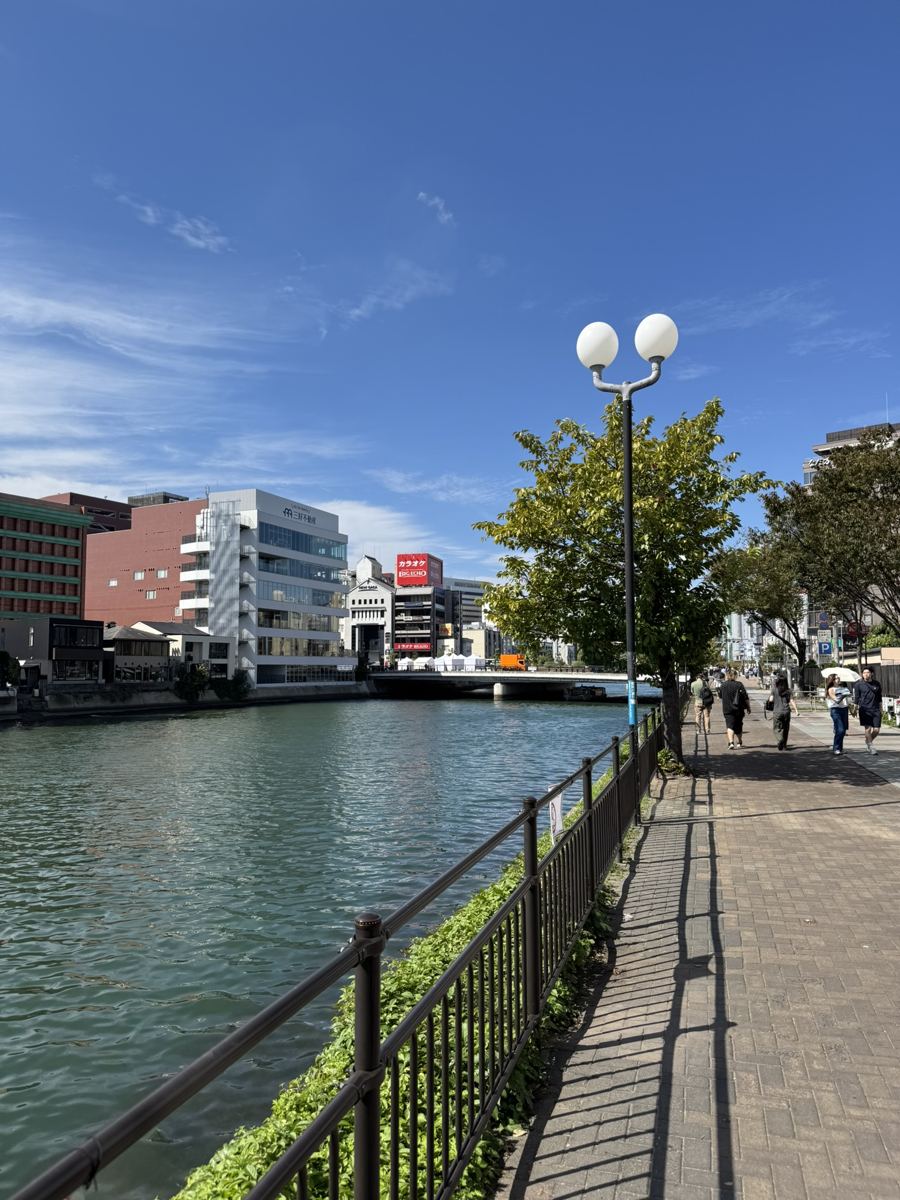
Next to Reisen Park there was an Oktoberfest going on, with a Paulaner tent and beer benches. Not exactly what I expected to find in Fukuoka, but living in Yokohama we are familiar with those! Generally the beer is great and the food okay-ish.
Ohori Park
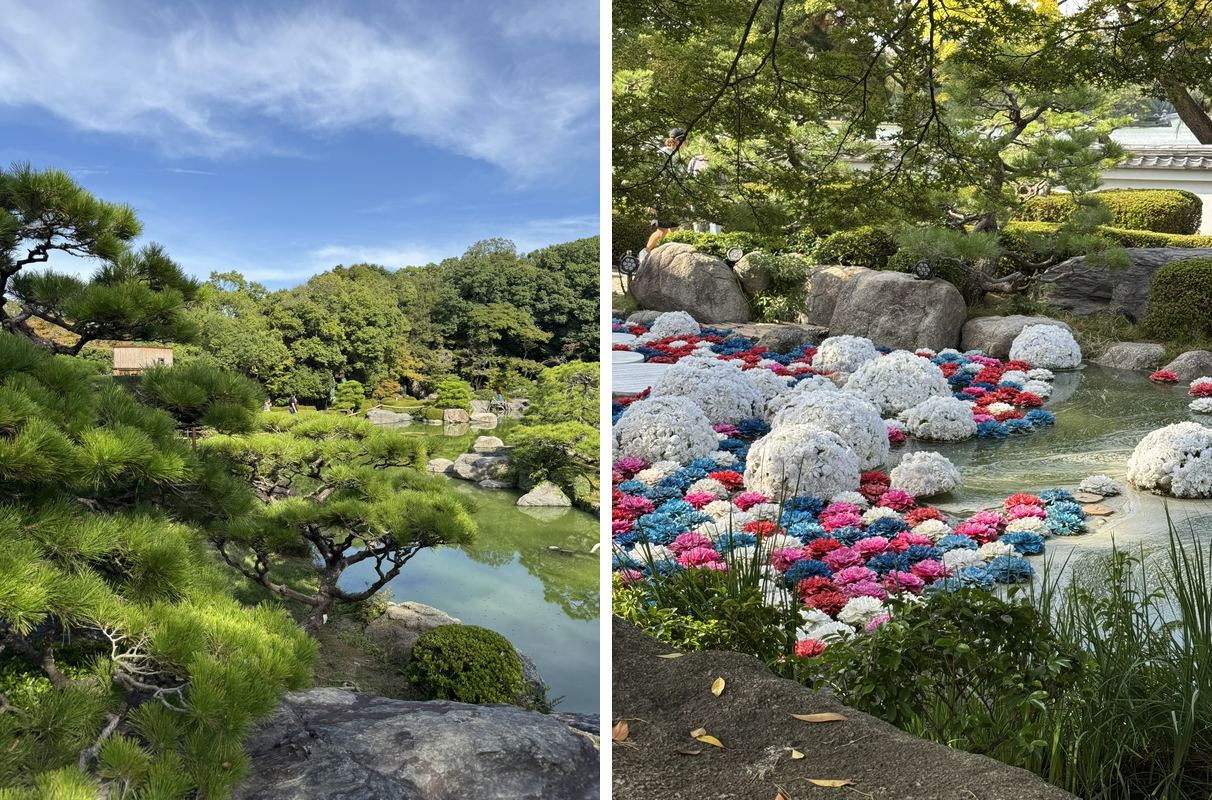
In the afternoon we went west to Ohori Park. In front of the Fukuoka City Art Museum there’s a bronze hare jumping off a bell, and right next to it is the Japanese garden. When we were there the pond was filled with these flower balls:
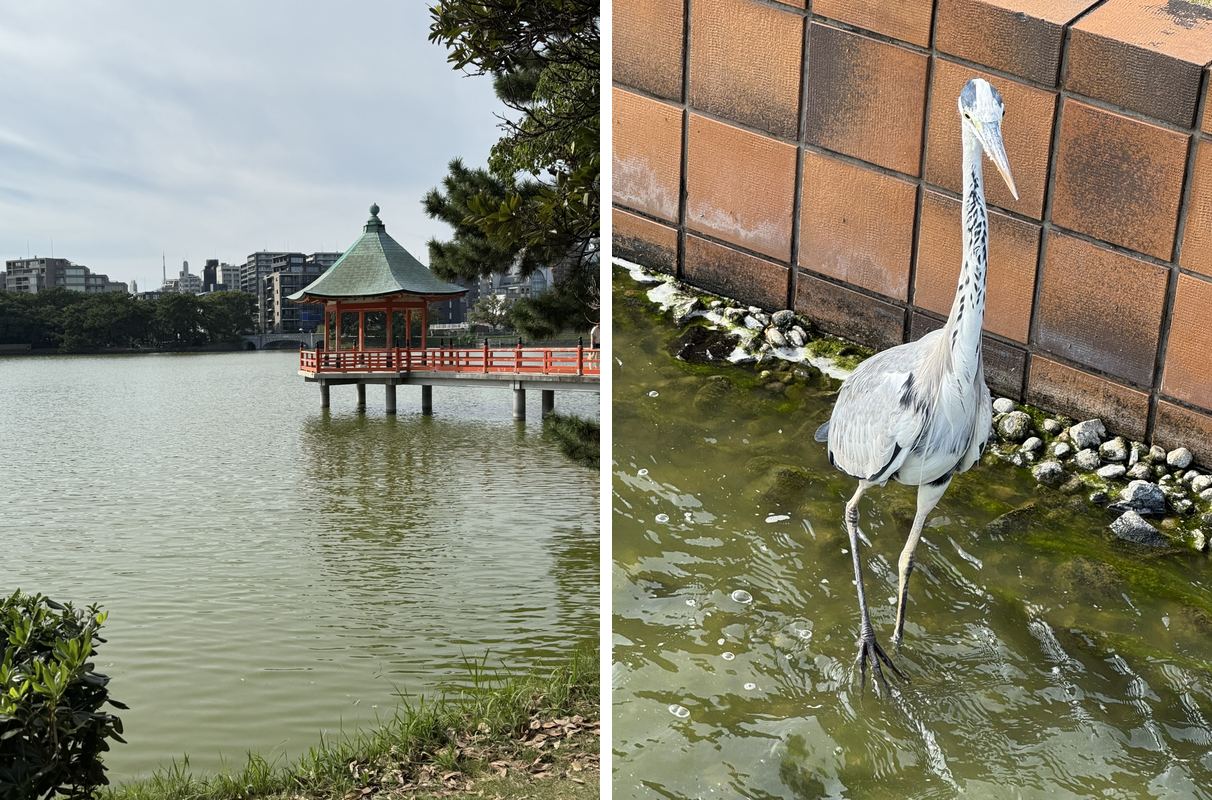
The park itself is a big lake (part of the old Fukuoka Castle moat) with a walkway across the middle. There’s a pavilion on the water, a lot of egrets, and a heron standing right next to the path.
Momochi Seaside Park
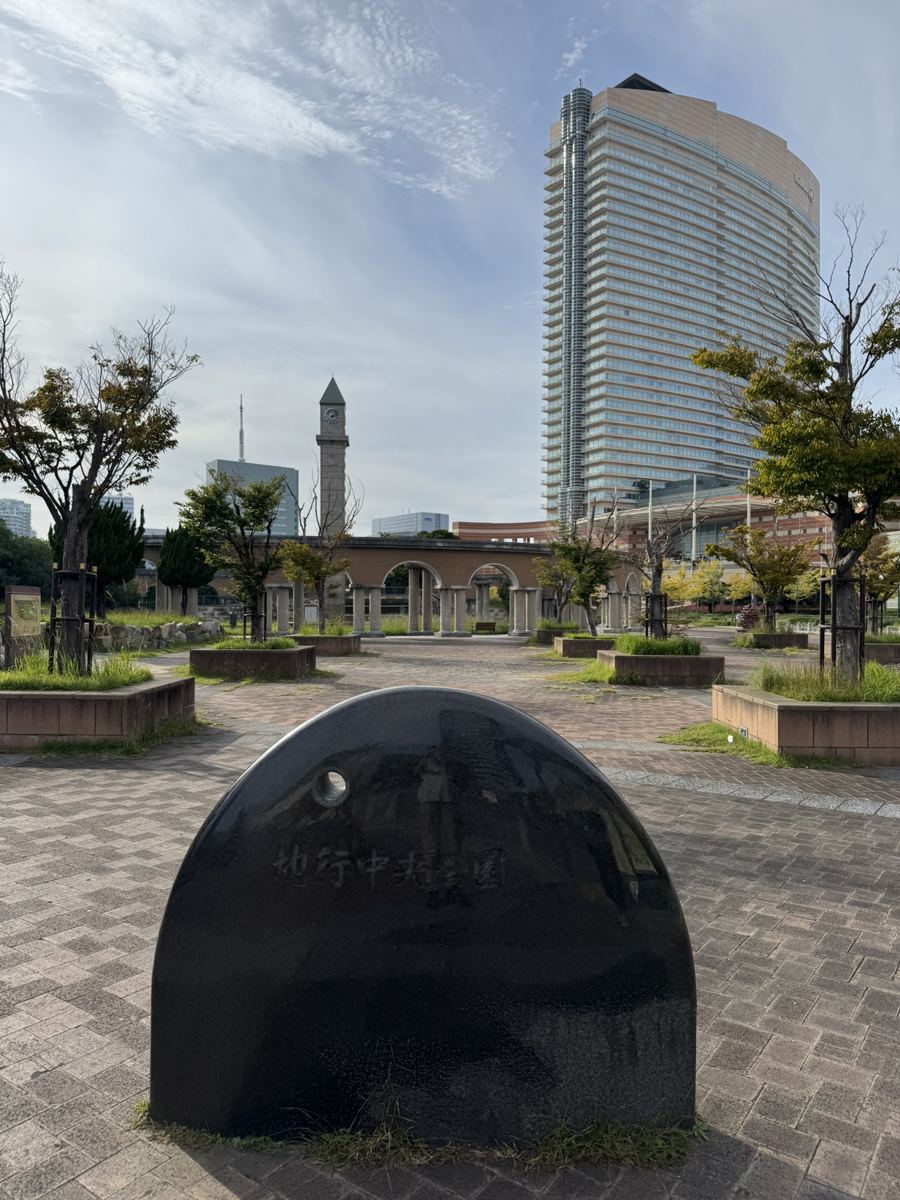
From Ohori we walked on towards the sea. On the way you pass Jigyo Central Park with the Hilton Sea Hawk behind it:
Momochi Seaside Park is an artificial beach right at the edge of the city. In the middle is Marizon - a few white buildings with shops, restaurants and a wedding chapel, built out onto a pier. It looks a bit like southern Europe, except for the planes coming in to land over the bay.
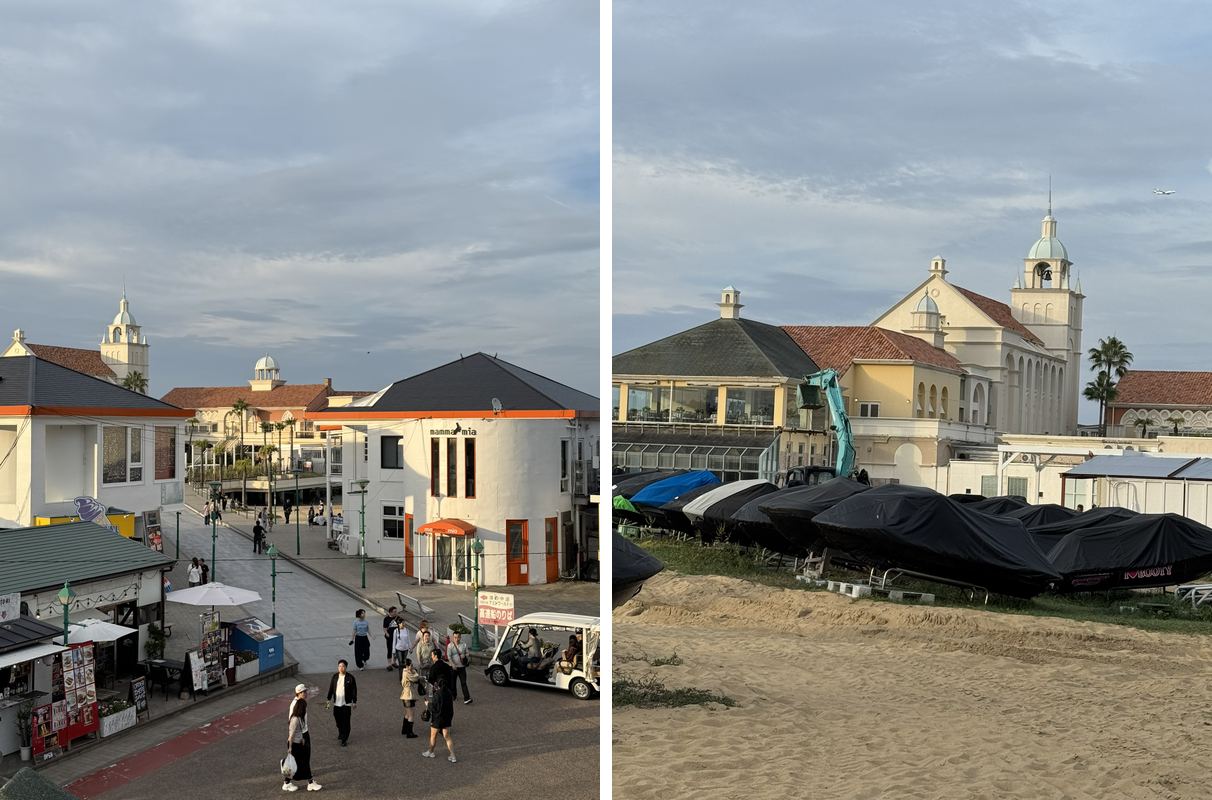 Marizon from above and from the beach. There’s a plane in the top right.
In the late afternoon the beach was full of people playing volleyball:
Fukuoka Tower
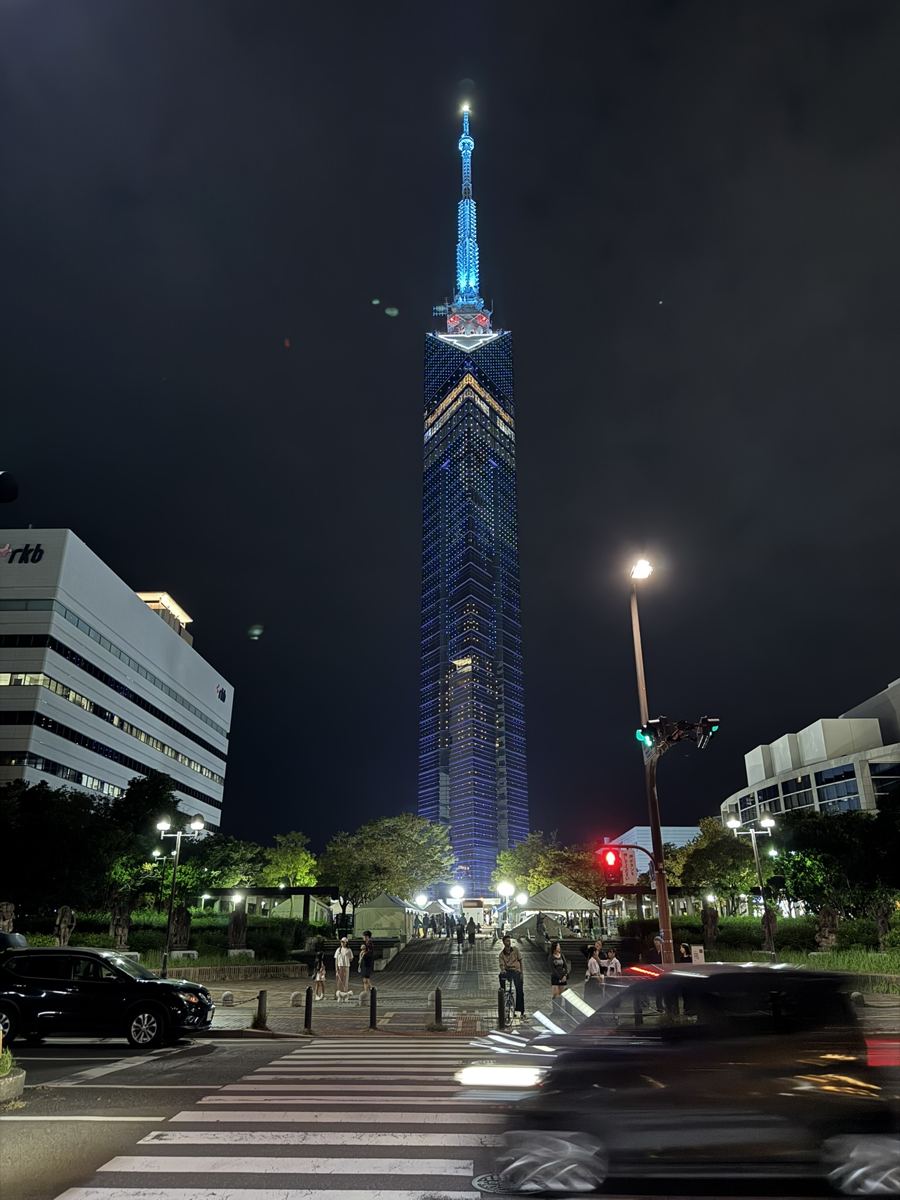
Fukuoka Tower is right behind the beach - 234 m tall, and lit up in blue at night.
Day 2: Temples and a Giant Buddha
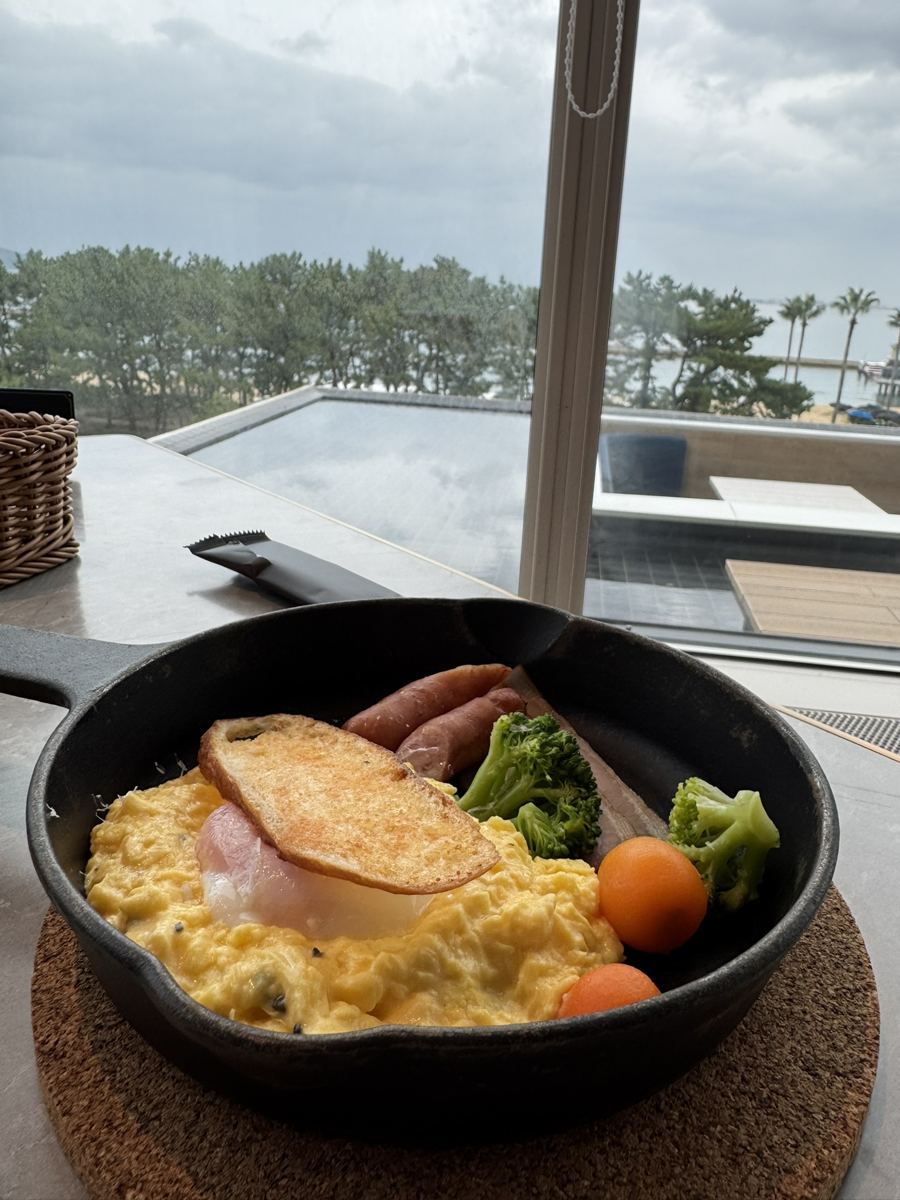
Breakfast with a sea view:
Shofukuji
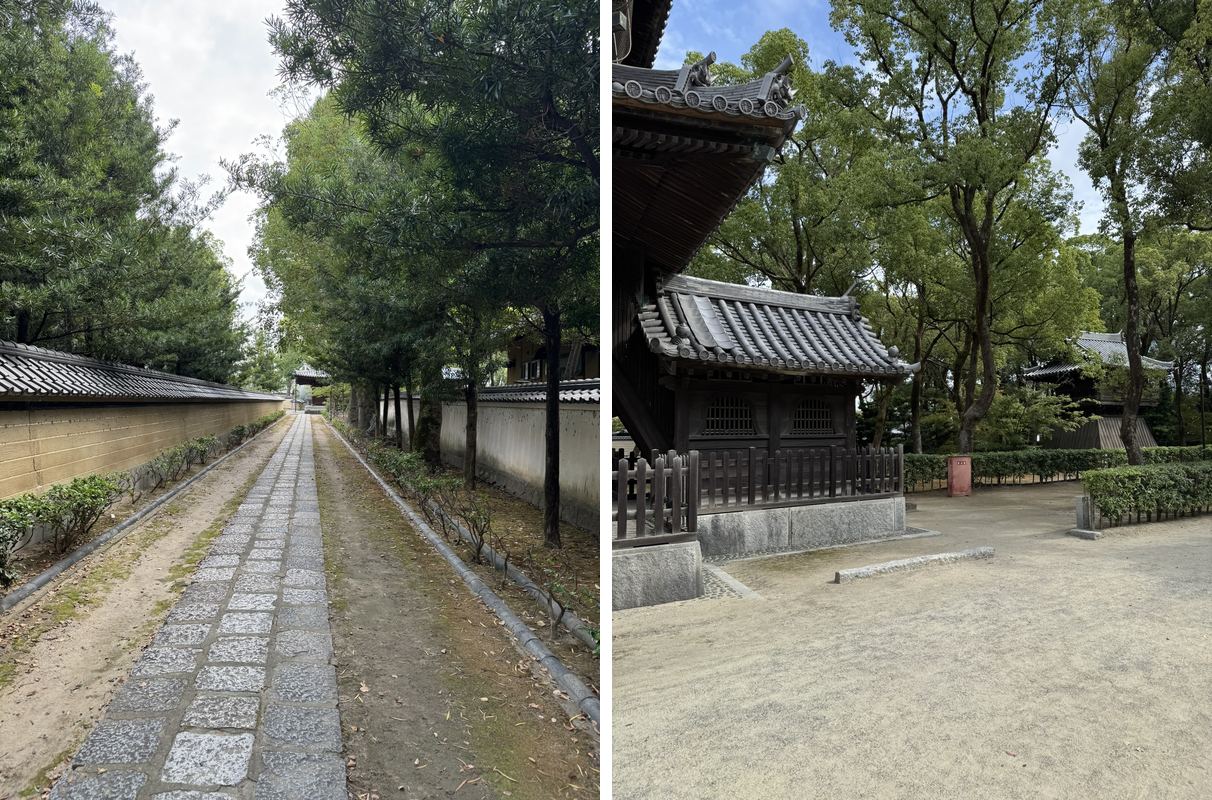
Back in Hakata we started at Shofukuji, which was founded in 1195 and is considered the first Zen temple in Japan. Its founder Eisai is also credited with bringing tea to Japan, and there’s a small marker for “the origin of Japanese tea” on the grounds. Most buildings are closed to visitors, but you can walk around between the walls and it’s very quiet, considering Hakata Station is only a few minutes away.
Nanzoin
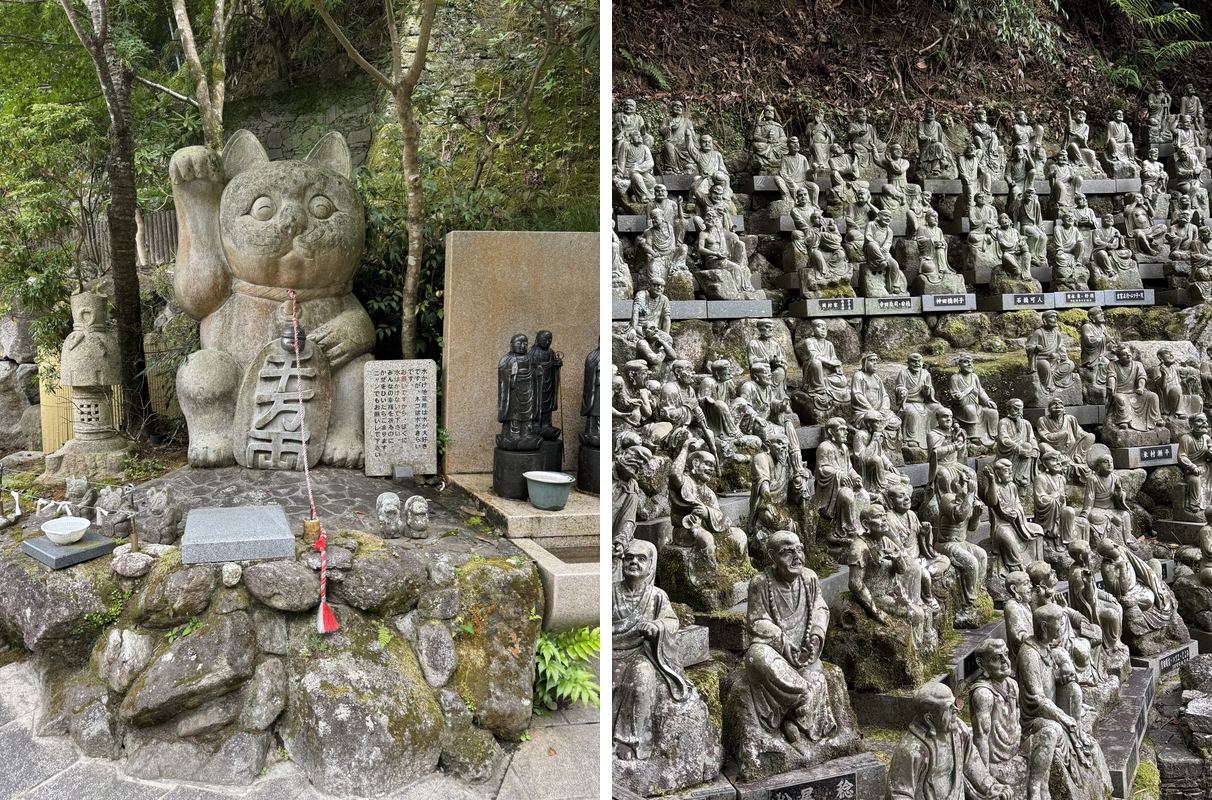
Next we went east to Nanzoin in Sasaguri, about half an hour outside the city. On the way up there’s a big stone maneki-neko and hundreds of small stone statues of Buddha’s disciples, all with different faces.
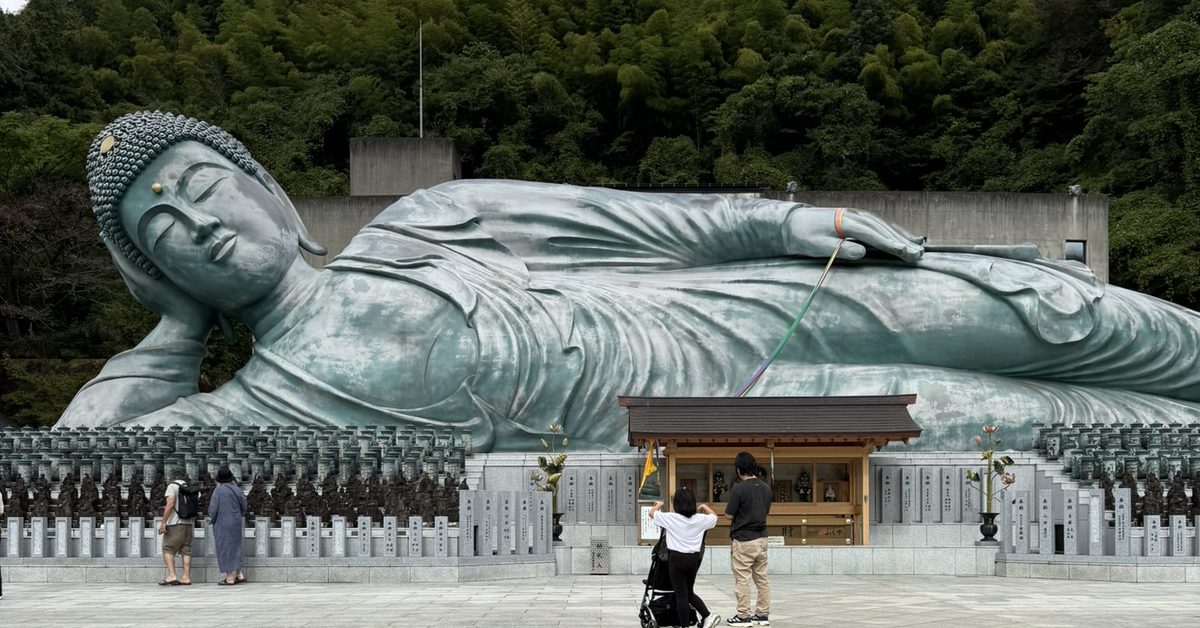
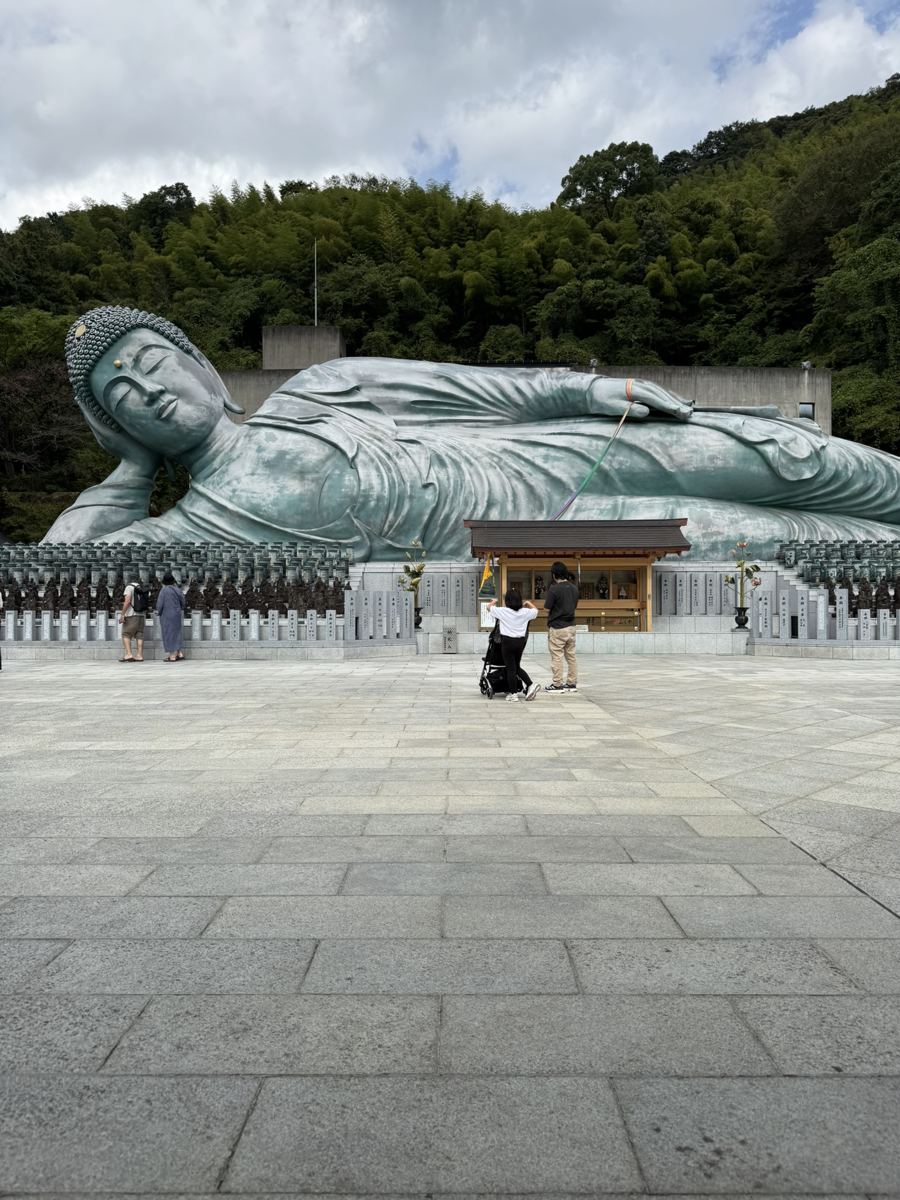
The main reason to go is the bronze reclining Buddha - 41 m long and 11 m tall, one of the largest bronze statues in the world. The photo doesn’t really show how big it is.
Tochoji and Kushida Shrine
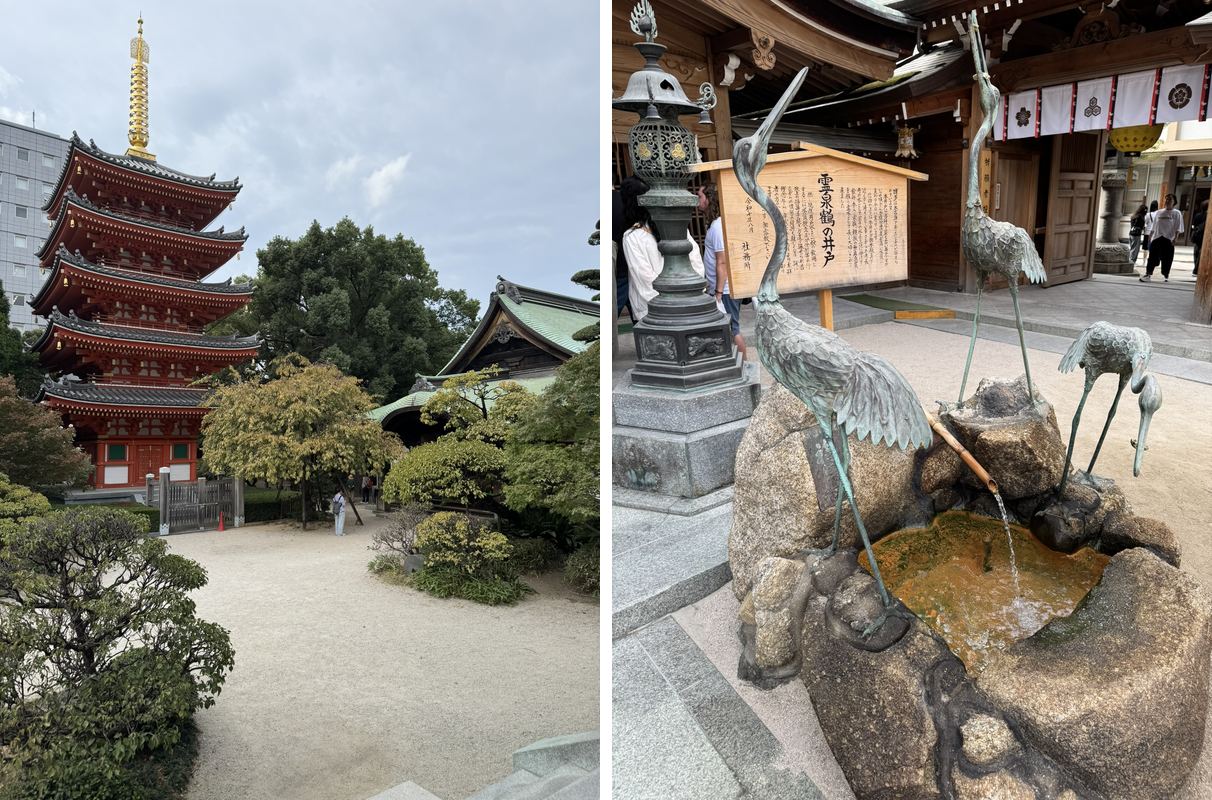
In the afternoon we were back in Hakata for a few more temples and shrines. Tochoji has a red five-story pagoda and the graves of the Kuroda clan, who ruled Fukuoka. Close by is Kushida Shrine, which has a fountain with bronze cranes:
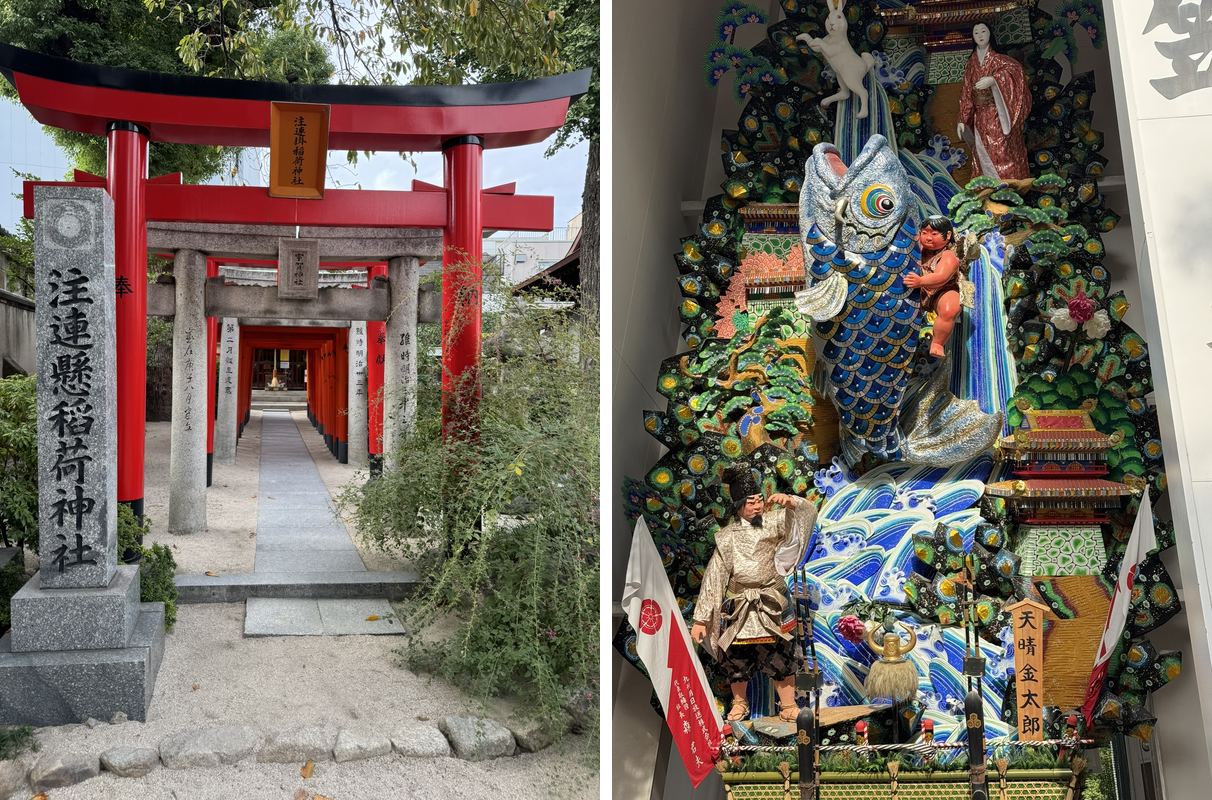
Kushida is the shrine behind the Hakata Gion Yamakasa festival in July, and they keep one of the decorated floats on display all year. It’s huge - samurai, waves and a giant koi climbing a waterfall. Next to it is a small Inari shrine with red torii.
In the evening we went up Fukuoka Tower (the observation deck is at 123 m) to watch the lights come on over Momochi:
Day 3: Itoshima
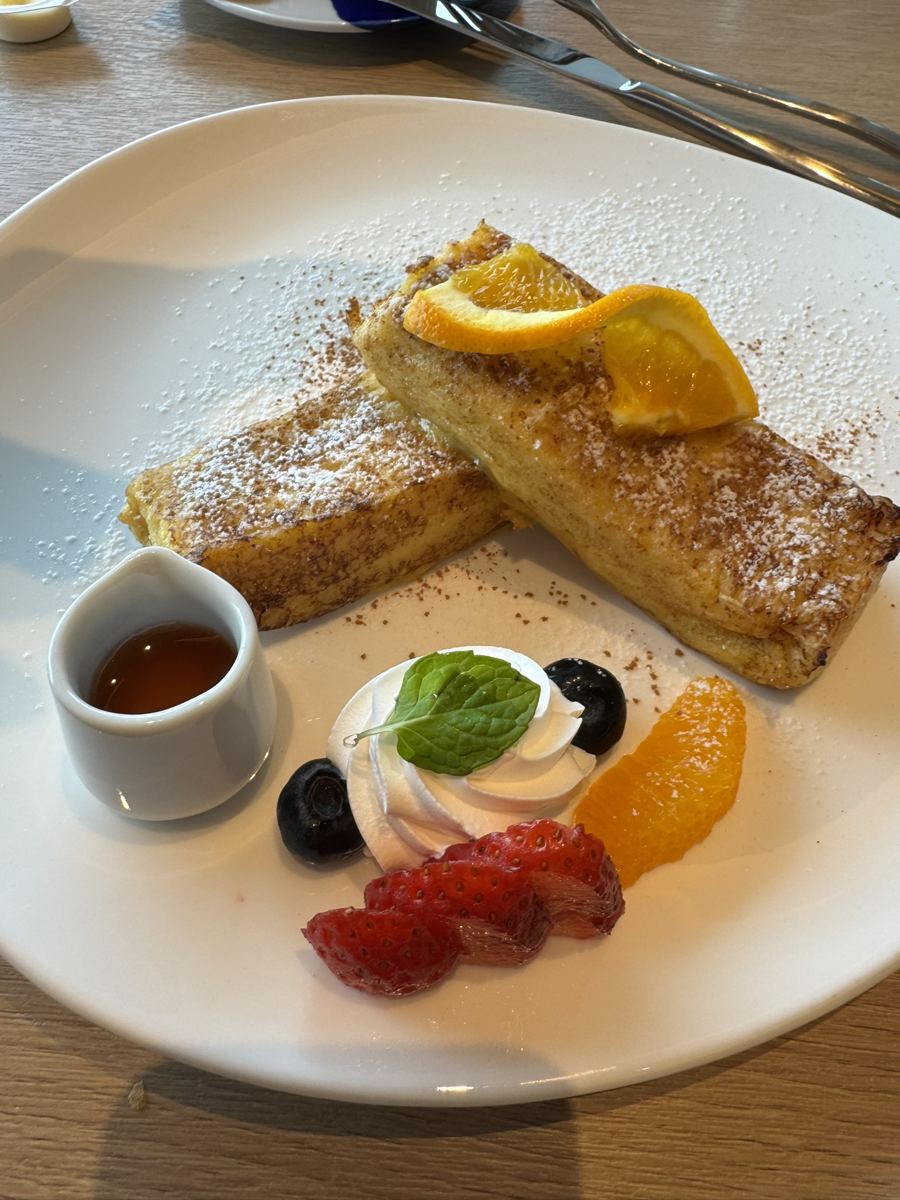
French toast this time:
On the last day we went west to Itoshima, a part of the coast with beaches and cafés. It’s a train out of the city and then a local bus, so an easy day trip.
Beach
On a Tuesday there was almost nobody there.
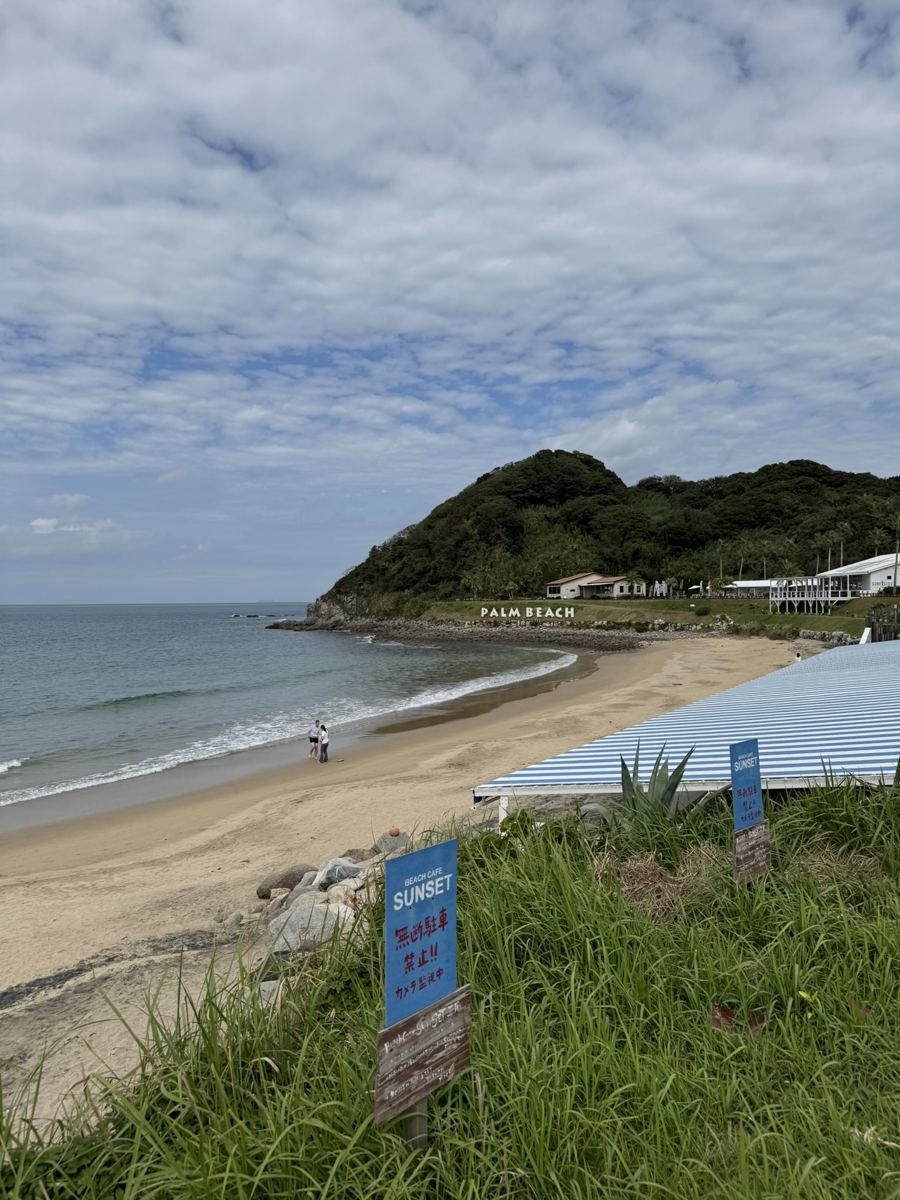
Of course we had to get our feet wet:
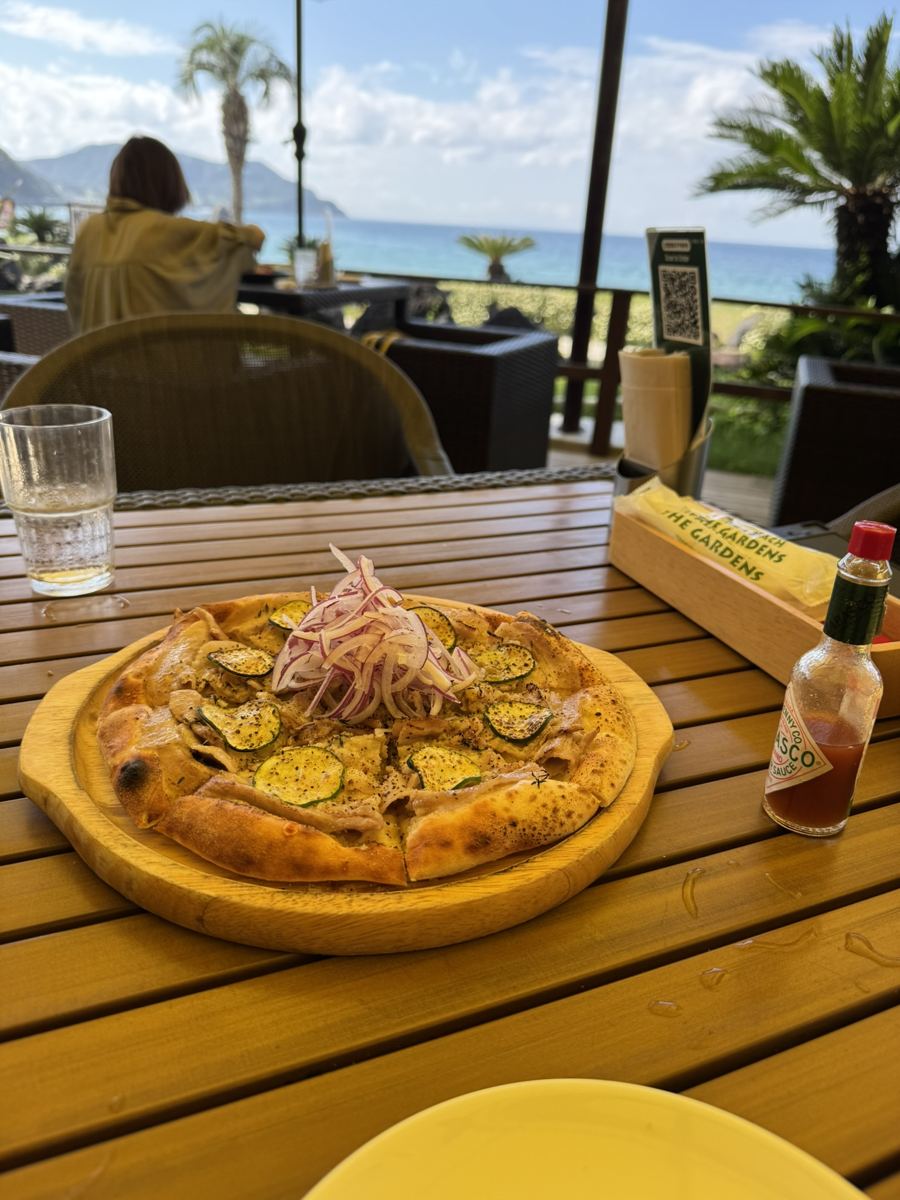
For lunch we had pizza at a café right above the beach, with a really nice view:
Futamigaura
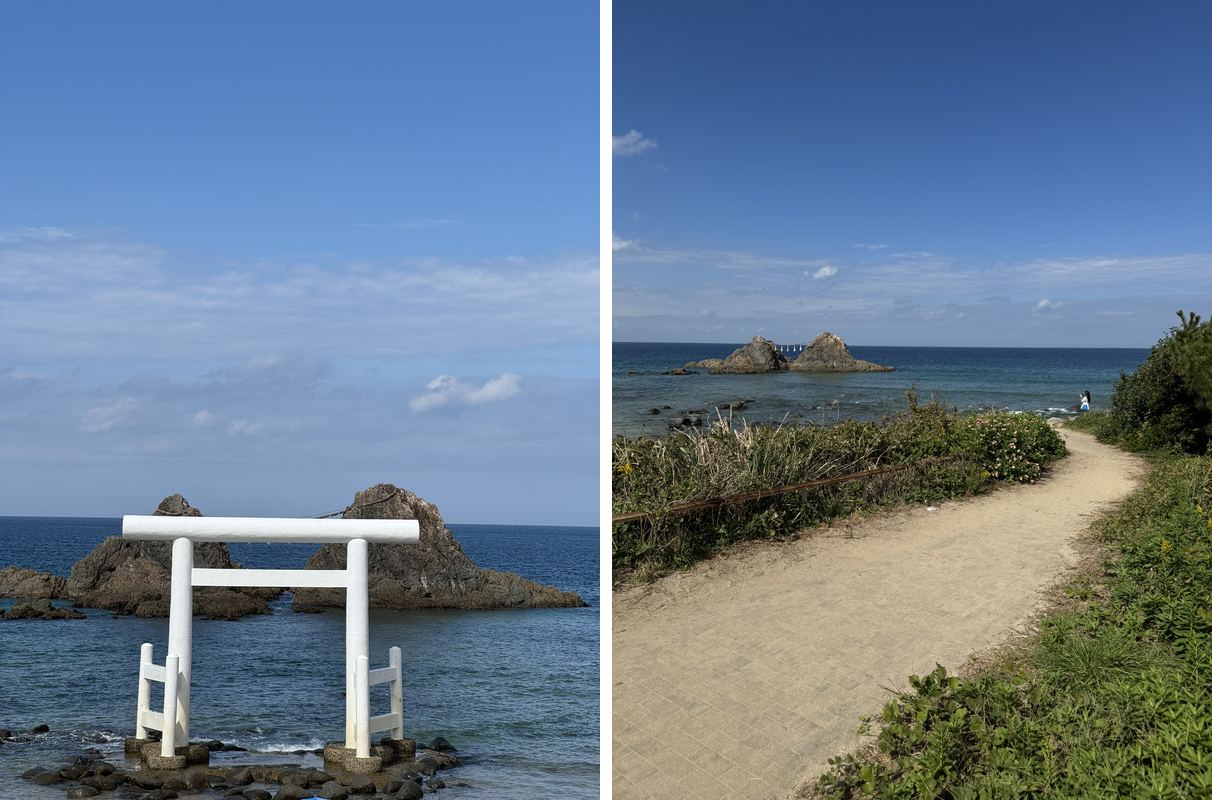
A short walk away is Futamigaura. Two rocks in the sea, the Meoto Iwa (“couple stones”), are tied together with a rope, and there’s a white torii in the water in front of them. It’s mostly known as a sunset spot, but it looks great during the day too.
Yatai and Yakitori
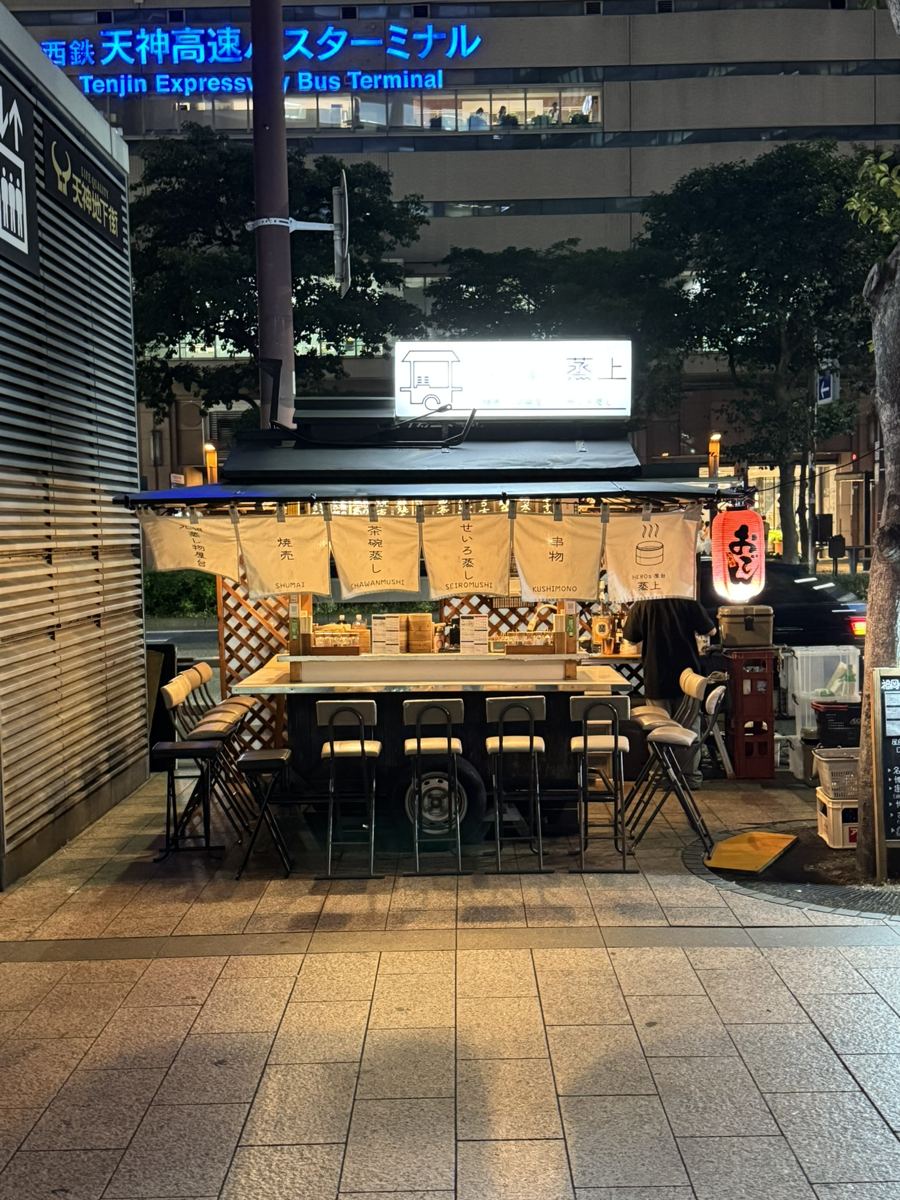
Back in Tenjin in the evening the yatai were opening. Fukuoka is known for these small street food stalls - they get set up every evening and are gone again in the morning.
From Tenjin we walked over to the river at Nakasu, which looks great at night with all the neon reflecting in the water:
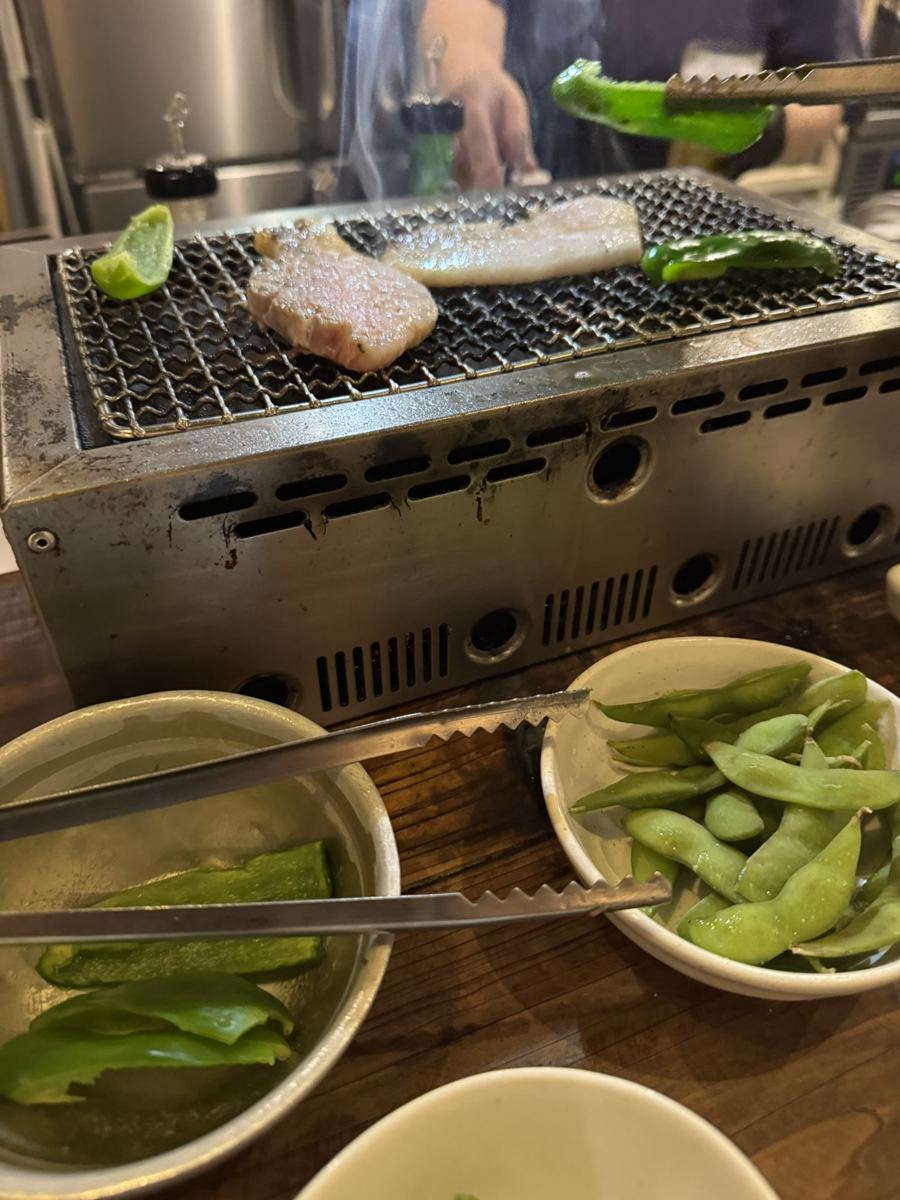
Our last stop was a yakitori place in Imaizumi with a small charcoal grill in front of every seat. Besides chicken they also had samgyeopsal - in the photo is pork belly with peppers and edamame.
Final Thoughts
Fukuoka is a really nice city to explore - it’s compact, the food is great, and you can go from temples to the beach in a single day. Three days felt a bit short, and there’s a lot more of Kyushu I’d like to see.